How many calories does BJJ burn? What the studies measured

The number your watch shows after class looks exact. It is an estimate, and grappling is one of the harder things for a wrist to estimate. Here is what researchers have measured, a way to work out your own class, and what a tracker can and cannot tell you.
The short answer
The Compendium of Physical Activities, the reference researchers use for the energy cost of activities, lists martial arts at two speeds. At a slower pace, as in novice practice, it puts them at 5.3 METs: 5.3 times what you burn sitting still. At a moderate pace, with jujitsu named in the entry, at 10.3 METs.1 One MET is roughly one kilocalorie per kilo of body weight per hour, so an hour costs about 5 kcal per kilo at the easy end and 10 at the hard end.
| Body weight | Slower practice | Moderate pace |
|---|---|---|
| 60 kg (132 lb) | 318 | 618 |
| 70 kg (154 lb) | 371 | 721 |
| 80 kg (176 lb) | 424 | 824 |
| 90 kg (198 lb) | 477 | 927 |
| 100 kg (220 lb) | 530 | 1030 |
Arithmetic, not a measurement: kcal per hour = METs × body weight in kg, with the Compendium’s 5.3 and 10.3 METs for martial arts. Includes what you burn at rest.
A real class mixes both: a warm-up, technique and drilling at an easy pace, then rounds. The more of the hour you spend rolling, the closer you get to the second column.
What a round costs
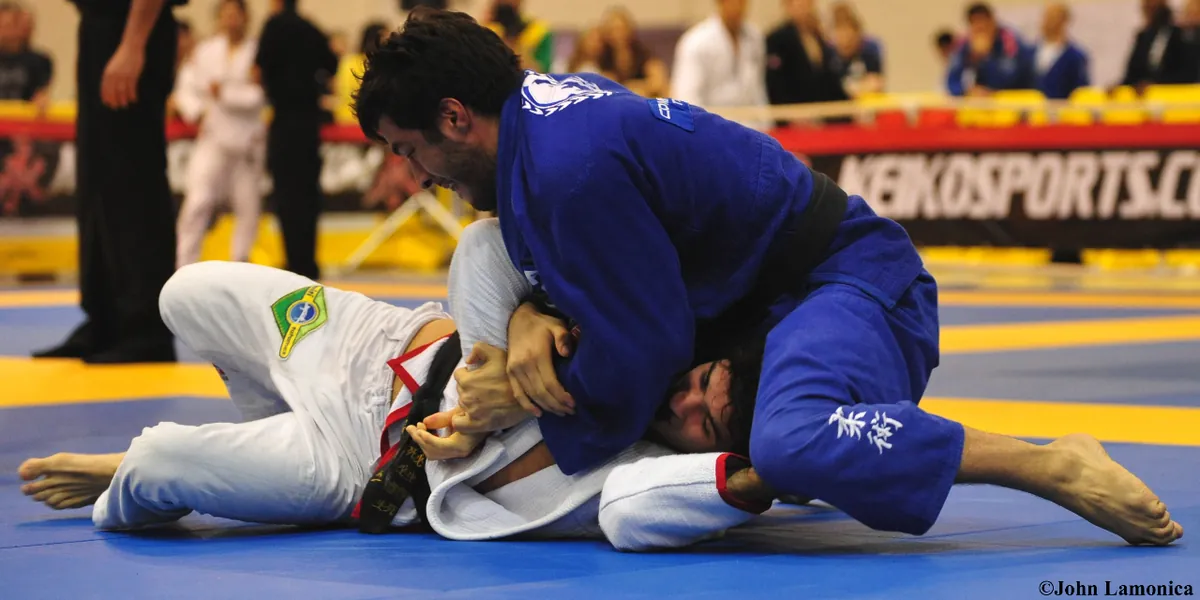
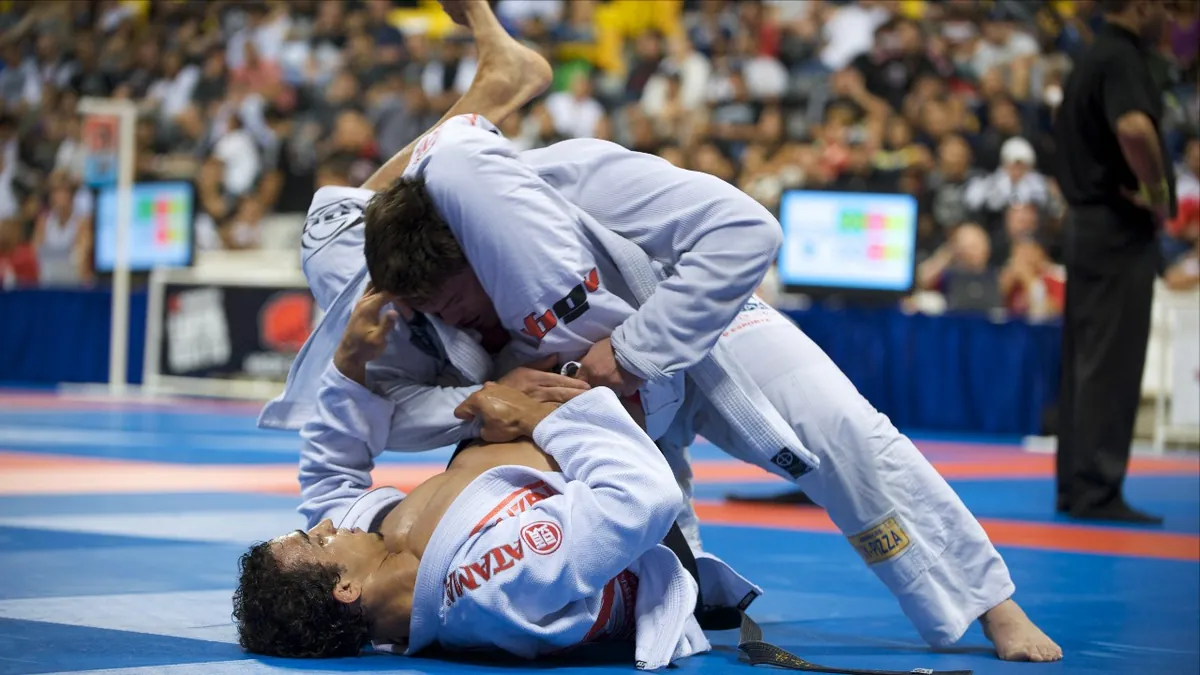
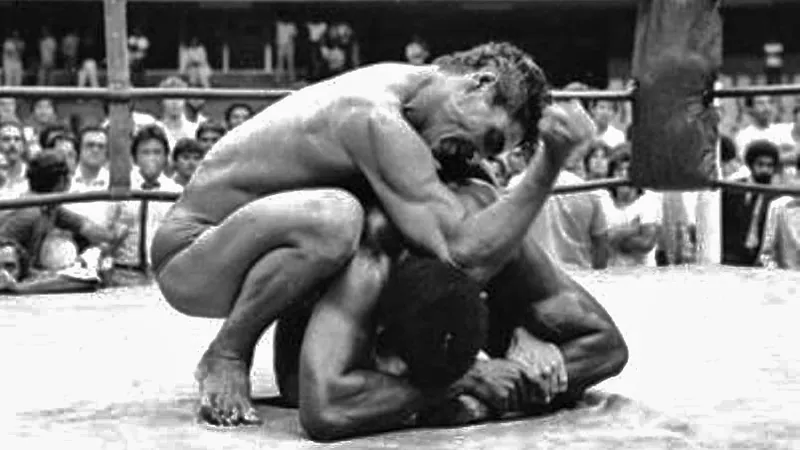
Rolling is the expensive part. In a 2021 study, ten advanced grapplers sparred six-minute no-gi rounds and the researchers estimated their energy use. At the end of a round they were taking in about 44 millilitres of oxygen per kilo per minute, around 12.6 METs. That is before the energy the body makes without oxygen, most of which came from the same system that produces lactate.2
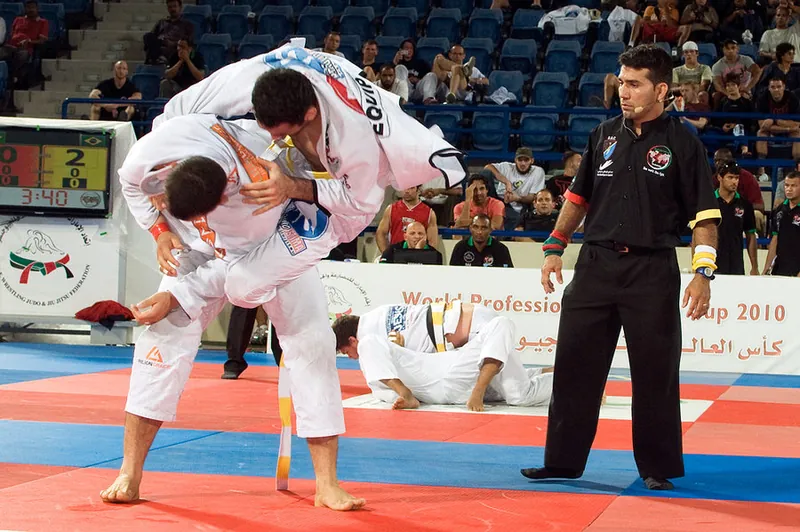
That system works hard in competition too. In a study of regional competition matches, the fighters’ blood lactate rose from 4.4 to 10.1 mmol/L, their grip strength dropped, and the matches ran in bursts: high-intensity actions lasted about four seconds, and there was six times as much effort as pause.3
Why your watch disagrees
A wrist tracker estimates calories from your heart rate, your movement and a formula. Each step adds error.
- Calories are the weak point. When Stanford researchers tested seven wrist devices against lab measurement, none estimated energy expenditure within 20%, even while sitting, walking, running and cycling. Heart rate was far better: on a bike, six of the seven had a median error under 5%.4
- Gripping is hard on the sensor. Across 44 studies, wrist heart rate matched a chest strap or ECG closely at rest and on a treadmill, but read about 7 beats per minute low during resistance training, and the gap grew as heart rate rose.5 Grappling is closer to lifting than to jogging: gripping, squeezing, wrists bent.
- The workout mode matters. In a test of two common trackers, accuracy dropped markedly when the exercise mode was not switched on, and in exercise with little wrist motion.6
- The error is not the same for everyone. In a 2026 test of four current watches against lab measurement, three overestimated the calories of a 10-minute cycling test, by 22 to 69 kcal on average, and the error grew with body fat.7
We found no study that has tested wrist trackers during jiu-jitsu. These results come from sitting, walking, running, cycling and lifting, so they show where a watch is weak, not how far off it is on the mat.
Getting a better number
- Start the martial arts workout mode before class, not after it.
- Check it against the arithmetic: your weight in kilos times 5 for an easy class, times 10 for a hard one.
- Compare your classes with each other, on the same watch and the same mode, rather than with someone else’s number.
- For heart rate, a chest strap is the reference these studies held watches against.5
What the research does not show
No study we found has measured a whole BJJ class with lab equipment, from the warm-up to the last round. The Compendium’s values cover martial arts in general, and the sparring study had ten advanced grapplers, without the gi. Your weight, your fitness and how hard you roll all move the number.
TakeawayAn hour of BJJ costs roughly 5 to 10 kcal per kilo of body weight, more the longer you roll. Treat your watch’s number as an estimate with a wide margin, and use the same mode every time.
Your watch counts the effort. Cauli keeps what the effort was for: the rounds you rolled, who with and how they ended, and the techniques you learned, written as steps and rehearsed from memory on gaps of 1, 3, 7, 14, 30 and 60 days. We have not run a study on Cauli itself.
Sources
- Herrmann, S. D., Willis, E. A., Ainsworth, B. E., et al. (2024). 2024 Adult Compendium of Physical Activities: a third update of the energy costs of human activities. Journal of Sport and Health Science. Martial arts are codes 15425 (5.3 METs) and 15430 (10.3 METs) on the Compendium’s sports page. pacompendium.com/sports
- Pessôa Filho, D. M., Sancassani, A., da Cruz Siqueira, L. O., et al. (2021). Energetics contribution during no-gi Brazilian jiu jitsu sparring and its association with regional body composition. PLoS ONE, 16(11), e0259027. doi.org/10.1371/journal.pone.0259027
- Andreato, L. V., Franchini, E., de Moraes, S. M., et al. (2013). Physiological and technical-tactical analysis in Brazilian jiu-jitsu competition. Asian Journal of Sports Medicine, 4(2), 137–143. doi.org/10.5812/asjsm.34496
- Shcherbina, A., Mattsson, C. M., Waggott, D., et al. (2017). Accuracy in wrist-worn, sensor-based measurements of heart rate and energy expenditure in a diverse cohort. Journal of Personalized Medicine, 7(2), 3. doi.org/10.3390/jpm7020003
- Zhang, Y., Weaver, R. G., Armstrong, B., Burkart, S., Zhang, S., & Beets, M. W. (2020). Validity of wrist-worn photoplethysmography devices to measure heart rate: a systematic review and meta-analysis. Journal of Sports Sciences, 38(17), 2021–2034. doi.org/10.1080/02640414.2020.1767348
- Reddy, R. K., Pooni, R., Zaharieva, D. P., et al. (2018). Accuracy of wrist-worn activity monitors during common daily physical activities and types of structured exercise: evaluation study. JMIR mHealth and uHealth, 6(12), e10338. doi.org/10.2196/10338
- Kostrna, J., Oparina, E., Palacios, C., et al. (2026). Body fat, skin tone, and the accuracy of smartwatch caloric expenditure estimates. PLoS ONE, 21(7), e0353261. doi.org/10.1371/journal.pone.0353261