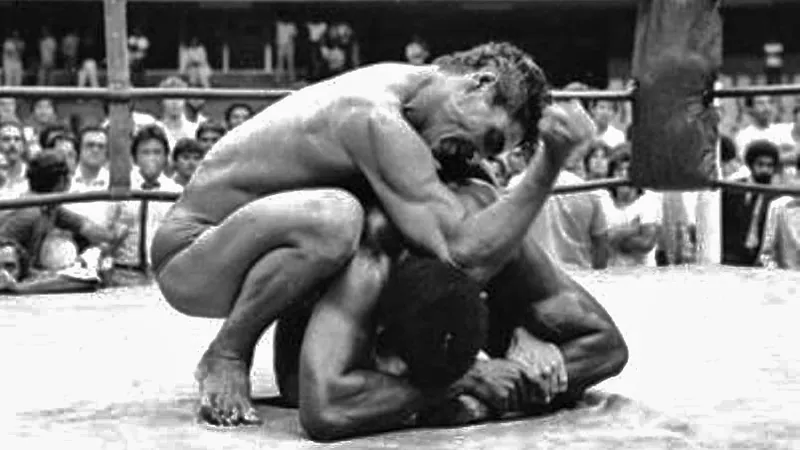
How to study BJJ instructionals so they actually stick
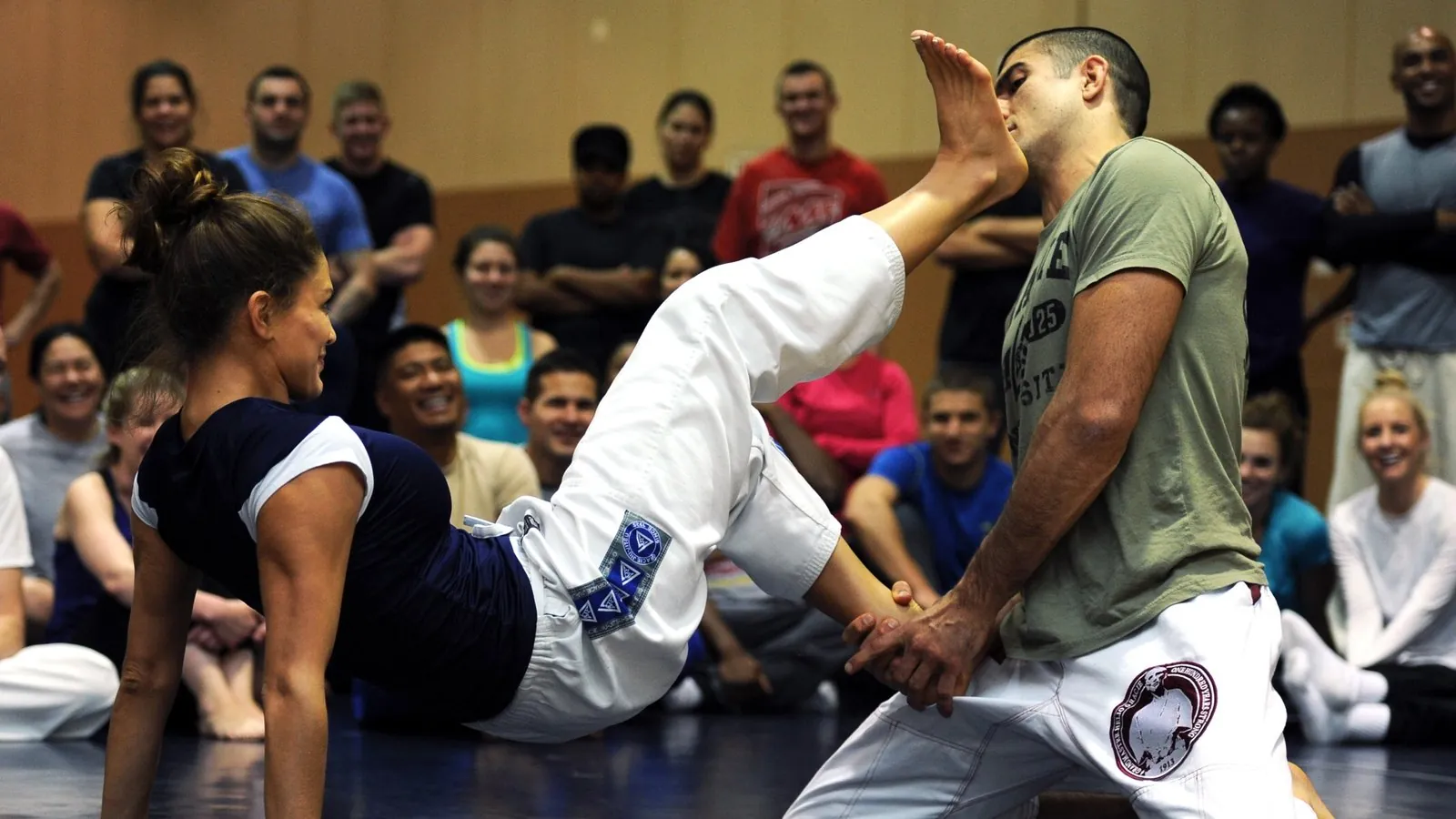
An instructional can hold years of a black belt’s thinking. It can also leave you with nothing, if all you do is watch it. Research on learning from video, from watching others and from memory points to a better way to use one.
Watching feels like learning
In six experiments with 2,225 people, the more often people watched someone perform a skill, the more confident they became that they could do it, with no gain in what they could actually do.1 An instructional is the same trap at full length: hours of clear demonstrations, each one familiar the second time you see it. Familiar is not the same as known.
1. Guess before you press play
Before a chapter on escaping side control, try to answer it yourself: from here, what would I do? In five experiments, people who tried to answer questions about a text before reading it learned more from it than people who spent the same time studying it, even on the questions they had got wrong.2 Those were essays, not escapes, but the move costs ten seconds: make your guess, then watch for where you were wrong.
2. Watch a piece, then drill it
Watching alone teaches less than doing. But in one lab study, people who alternated watching and practising did better than people who only practised when the task was changed, though not on the original one.3 In another, pairs on a balance board took turns, one practising while the other watched, and soon overtook people who trained alone.4 A later study found that it was watching the partner, more than talking with them, that helped.5
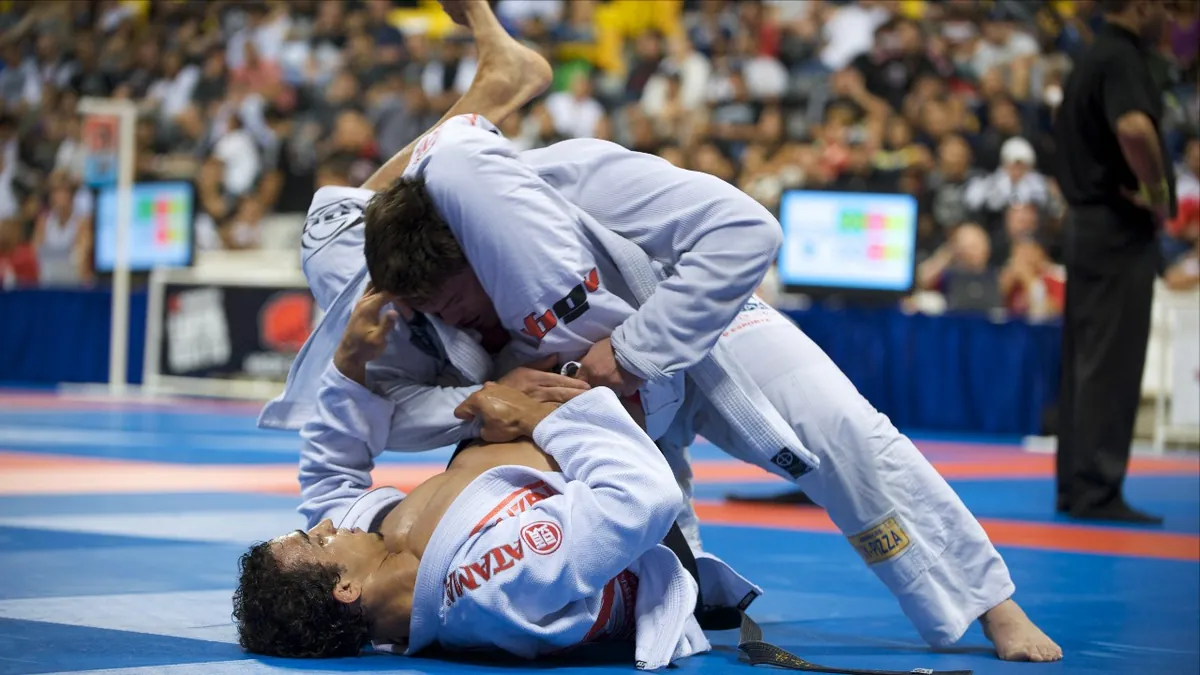
So watch one technique, drill it, then watch it again: the second viewing lands on a body that has felt the move. And when your partner drills, watching them is not downtime.
3. Speed up the talk, slow down the detail
In a study of lecture videos, watching at 1.5 or 2 times normal speed cost students little, on a test straight away or a week later, but going beyond 2 times did. Watching twice at double speed was no better than once at normal speed, unless the second viewing came just before the test.6 The authors note that videos built on what you see, not only what you hear, may behave differently. A technique lives in a grip and an angle, so play the explanation fast and the detail at normal speed, or frame by frame.
4. Write it, then recall it
When the video ends, write the technique as steps, in your own words. Across 86 studies, people remembered what they had produced themselves better than what they only read.7 Then close the notes and recall the steps before your next class. In a classic experiment, students who read a text once and recalled it three times remembered 61% of it a week later; students who read it four times remembered 40%.8 Jozef Chen, talking about how he studies instructionals, put it this way:
“I would make sure to write it down just so I could recall it as I was training. So I wouldn’t just watch it and leave it at that.”
A plan for one instructional
- Pick one chapter, not the whole series, ideally a position you keep ending up in.
- Guess first: what would you do from there?
- Watch in short pieces, and pause at each detail.
- Drill it that week, then watch the chapter again.
- Write the steps in your own words.
- Recall them before class, again a few days later, then a week after that.
What the research does not show
None of these studies used BJJ instructionals. The guessing, speed, writing and recall studies used texts and lectures. The watching studies used simple lab tasks, a balance board and stacking cups. The principles carry over well enough to try, but nobody has measured how much they add to your guard.
TakeawayAn instructional teaches only what you do with it. Guess first, watch in pieces, drill between viewings, write the steps, and recall them before you roll.
Cauli keeps the video link with the technique it taught you, next to the steps you wrote in your own words. In a rehearsal each step stays hidden until you recall it, and Solid or Shaky decides when the technique comes back: in 1, 3, 7, 14, 30 or 60 days. We have not run a study on Cauli itself.
Sources
- Kardas, M., & O’Brien, E. (2018). Easier seen than done: merely watching others perform can foster an illusion of skill acquisition. Psychological Science, 29(4), 521–536. doi.org/10.1177/0956797617740646
- Richland, L. E., Kornell, N., & Kao, L. S. (2009). The pretesting effect: do unsuccessful retrieval attempts enhance learning? Journal of Experimental Psychology: Applied, 15(3), 243–257. doi.org/10.1037/a0016496
- Shea, C. H., Wright, D. L., Wulf, G., & Whitacre, C. (2000). Physical and observational practice afford unique learning opportunities. Journal of Motor Behavior, 32(1), 27–36. doi.org/10.1080/00222890009601357
- Shea, C. H., Wulf, G., & Whitacre, C. (1999). Enhancing training efficiency and effectiveness through the use of dyad training. Journal of Motor Behavior, 31(2), 119–125. doi.org/10.1080/00222899909600983
- Granados, C., & Wulf, G. (2007). Enhancing motor learning through dyad practice: contributions of observation and dialogue. Research Quarterly for Exercise and Sport, 78(3), 197–203. doi.org/10.1080/02701367.2007.10599417
- Murphy, D. H., Hoover, K. M., Agadzhanyan, K., Kuehn, J. C., & Castel, A. D. (2022). Learning in double time: the effect of lecture video speed on immediate and delayed comprehension. Applied Cognitive Psychology, 36(1), 69–82. doi.org/10.1002/acp.3899
- Bertsch, S., Pesta, B. J., Wiscott, R., & McDaniel, M. A. (2007). The generation effect: a meta-analytic review. Memory & Cognition, 35(2), 201–210. doi.org/10.3758/BF03193441
- Roediger, H. L., & Karpicke, J. D. (2006). Test-enhanced learning: taking memory tests improves long-term retention. Psychological Science, 17(3), 249–255. The figures here are from Experiment 2. doi.org/10.1111/j.1467-9280.2006.01693.x
- The Sonny Brown Breakdown (2022). “Rapid Learning From BJJ Instructionals With Jozef Chen.” Video; the quote is at 12:37. youtube.com/watch?v=KSbinMafisM&t=757s